
On the Eve of Yom Kippur — Reflections on the Illusions of Knowing and Not Knowing, on Atonement and Seeking Forgiveness
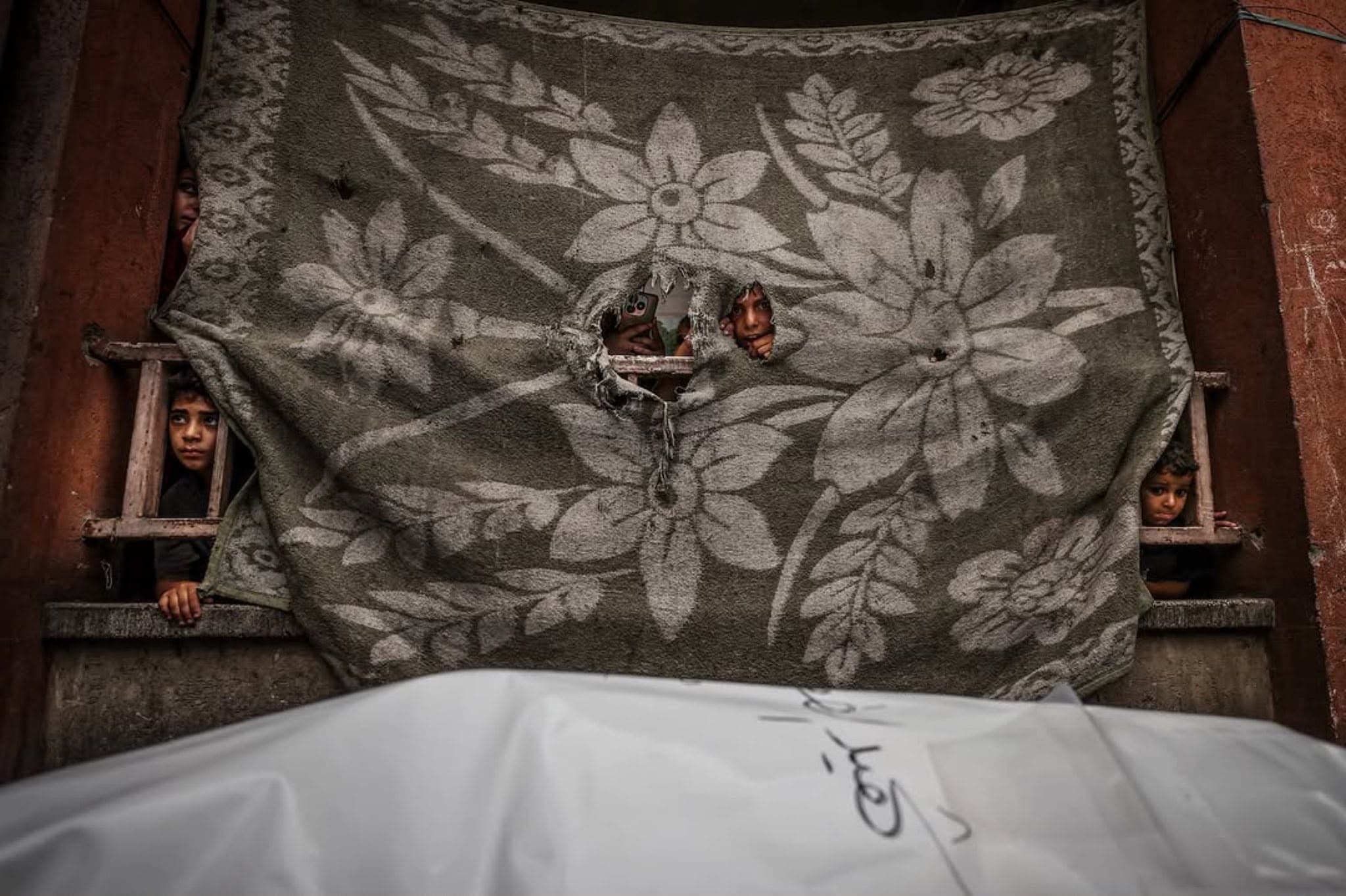
Yom Kippur — the day dedicated by Jewish tradition to confronting wrongdoing and interpersonal harm, with guilt and the possibility of repair. Alongside prayers addressed to God, Judaism attaches great significance to requests for forgiveness over sins committed between one person and another. Seeking atonement and forgiveness for interpersonal harm — for pain and injustice we have caused — is a form of mutual recognition of the hurt done to another. Repair is a process of acknowledging the wrong, seeking forgiveness, and taking responsibility, including action that has the power to change the harmful reality.
Yet it seems that in the culture surrounding Yom Kippur today, the emphasis is on seeking and receiving forgiveness. Within the fixed ritual of asking forgiveness lies the promise of pardon, erasure, and removal — annulling the very existence of the sin and purifying the sinner's soul until the next Yom Kippur. The act of kapparah carries an additional meaning that has faded from discourse over the years: covering and concealment. According to this reading, the sin is not erased but persists — merely hidden. In this way, the act of atonement allows the sinner to escape punishment, and perhaps also to continue in their ways without fear. There are sins hidden not only from the eyes of others but from the consciousness of the sinner, perhaps because acknowledging them brings the person face to face with the wrongful and aggressive parts within themselves — parts too hard to bear, which generate shame and guilt. The difficulty of holding these parts and taking ownership of them leads the person to project the evil far from themselves onto a real or imagined enemy. But the sin refuses to disappear; it is cast from the hidden recesses of the psyche onto the other in moments of conflict and disagreement, and all the more so when the other holds fragments of truth connected to the sin. Without acknowledgement of the sin, the projection spreads until the other becomes everyone, and everyone becomes Amalek.
And what of the sin of destroying a people? That requires massive processes of dissociation and mechanisms of concealment, camouflage, and denial. And when those fail — attempts at justification. To justify the most terrible of acts, one must minimise, distance, and deflect attention. To deny, one needs an appropriate social and psychological infrastructure and a supportive epistemic bubble. But what one does not wish to know keeps surfacing and creates paradoxes in consciousness: Israel is destroying the Palestinian people — while simultaneously denying their existence; soldiers film themselves abusing Palestinians, blowing up and flattening, and send the footage proudly to family and friends — yet anyone who says they are killing and flattening and blowing up is a traitor and a liar; soldiers and settlers in masked uniforms execute Palestinians in the occupied territories, in Gaza and in prisons where they undergo torture — yet the IDF is the most moral army in the world and the soldiers are only protecting us; government ministers call for Gaza to be flattened, for an atomic bomb to be dropped on it, declare that there are no innocent people in Gaza including day-old infants — alongside a collective self-image of "a chosen people pursuing peace."
Illusions upon illusions, on the eve of Yom Kippur. Can one know and also not know? Simultaneously? Or moment after moment? When Palestinians cry out about killing, one can say it is a blatant lie. When foreign eyes peer in, one can shut the blinds. When people from here raise their voices, one can silence and threaten. And in a parallel process, the sin of concealment reconstitutes itself. The repelling, hostile, aggressive, unbridled reactions to the film No Other Land — which the majority of those responding had not seen — expose the psyche's hiding place where the sin is buried. And yet the crimes reported in the film were known in advance and are documented in countless testimonies from Gazans, doctors, journalists, and eyewitnesses including Israeli soldiers. The facts of the IDF's many war crimes in Gaza and the West Bank have been documented, filmed, transcribed, and disseminated in recent years by the victims of the genocide and the occupation and by witnesses from within and abroad, including Jewish residents of Israel/Palestine. Articles, investigations, analyses, and reports have been published by local and international human rights organisations. Yet to no avail — the Israeli public has sealed itself off from seeing these sights and hearing these voices.
The majority of Israelis have chosen to avert their gaze, not to see and not to know, to preserve a moral and victimised self-image while the killing and destruction wrought by our hands continues. A perfect splitting, a perfect illusion, a perfect cover. Journalists from Gaza reported on it; the testimonies of survivors of the massacres accumulated steadily; the world saw what in Israel great efforts were invested — with the collaboration of a compliant media — in not seeing. Facts and fragments of reality that Jewish society in Israel refuses to encounter and absorb keep surfacing like rejected beta particles that cannot be erased. Truths about the Nakba, the colonial occupation, the establishment of a unique apartheid over Palestine, the blockade and siege of Gaza, the isolation and dispossession of the occupied territories, the cruel torture of political prisoners and the ever more prolonged torture of endless legal decrees and the erasure of basic human rights. Truths about the fact that 7 October was preventable — from before '48 through to the week and hours before it happened. Truths about the fact that the government sacrificed the hostages, including through the Hannibal Directive, who could have been returned immediately and at various points in time since then. Truths about retribution devoid of conscience, restraint, and accountability. Truths about the relentless and cruel killing of the residents of Gaza and of Palestinians throughout the space between the river and the sea.
The connection between the divided parts is unbearable. The trauma of the 7 October massacre resides at all times in the background of the personal and collective psyche — as an open wound, a consequence of catastrophic leadership failure — but also as a pretext not to see, not to know, to justify and to perpetuate endless cycles of revenge and violence. A harrowing reenactment of the Holocaust trauma and its transmutations in the collective Israeli psyche.
And then, as in the fable of the emperor's new clothes, Yuval Abraham and Rachel Szor — in their film No Other Land — "showed us" and showed us that the emperor is naked. Now, the entire crowd unites to silence and intimidate those who dared to show us what we did not want to see, to let us hear the voices of soldiers testifying in the first person to what we did not want to hear, to bridge the split consciousness between the hands that act and the mind that knows. Whoever speaks the truth and presents the facts of reality as they are — if they are Israeli — is declared a traitor; if from the international community — an antisemite. And if they are Palestinian — they are lying, and in any case it does not matter what they say, because they have no right to speak, to resist, or to live. The Palestinian subject has been utterly dehumanised in Israeli consciousness. They are not a person.
According to Orwell, there is a connection between the degree to which a society has distanced itself from the truth and the degree of aggression and hostility that rises towards those who dare to touch it and bring it to the surface. The distance from truth can have many dimensions: physical, such as the erection of walls; social, such as the labelling of a group of human beings as non-human; political, such as the trampling of human and civil rights; and an emotional dimension that rests on the psyche's defence mechanisms. Mechanisms such as denial, reaction formation, displacement, repression, and negation are designed to reduce the anxiety that arises from an unbearable internal threat. Words such as defence and threat echo the frightening and bloodied reality surrounding us. But an internal threat — to the extent that the distinction between it and external reality is made — is something that we as therapists believe to be valuable, because it can teach us and mark the path towards movement, change, and at times even healing. We are accustomed to working in spaces of psychic dread, but in the current reality in which we live, emotions govern people without any room for reflection, and psychic dread is easily confused with dread of actual reality — and more than that, with truth. In this way, the flooding of emotion, rather than being able to be translated into an opportunity for digestion, reflection, and learning towards more considered engagement with the world, takes on the meaning of emotion = truth, an equation that leads to unbridled actions without thought or regulation, causing terrible harm as though as a matter of course. An internal threat of this kind that finds no home in a psyche incapable of containing it is projected outward — most often onto those who were pre-labelled as fitting targets outside — and in our society that means "the non-human Palestinian."
The psychological illusions of human beings allow them to know and at the same time not to know, in the face of unbearable reality. But as those who strive to be human, after three blood-soaked years that have included the trauma of the 7 October massacre and the preparation and execution of a genocide against the Palestinian people — including the destruction of all life infrastructure and the killing of 20,000 children in Gaza — the time has come to look in the mirror and confront the facts and the moral consequences of our actions.
As practitioners of therapy and welfare, we are well acquainted with the dynamics of families and communities that ignore acts of abuse taking place in their midst, or demand that the dirty laundry not be aired in public. But the laundry has long been hanging in public. The entire world sees it, and only we here continue to bury our heads in the sand — sand soaked in the blood of the murdered — while we carry on with the ritual of atonement, cover, and denial. It is to be hoped that the intensity of the resistance to the film No Other Land is also testimony to a crack in the rigid shell of concealment — and that the intensity of the resistance mirrors the intensity of the shame and alarm at what has been exposed to the Israeli public, which knew and did not know what we have done in Gaza.
And on Yom Kippur, we call for genuine moral reckoning. We must move from attempts to erase or conceal malignant and unbearable guilt — to containing it within the psyche, to taking responsibility and making an endless effort towards repair. We must relinquish the wish that the mere existence of Yom Kippur in the calendar will bring about atonement and erasure. Every process of healing begins with accepting reality and recognising that what is hidden from the eye, the heart, and the consciousness continues to operate in darkness and to bring about catastrophe. We are obligated to stop closing our eyes to our actions and stopping our ears to the terrible human suffering we are causing.
*In the photo: Children in a displaced persons tent in Deir al-Balah look at the body of their friend before burial, Mahmoud Issa, Reuters.