Silence is not a neutral stance — silence is a crime

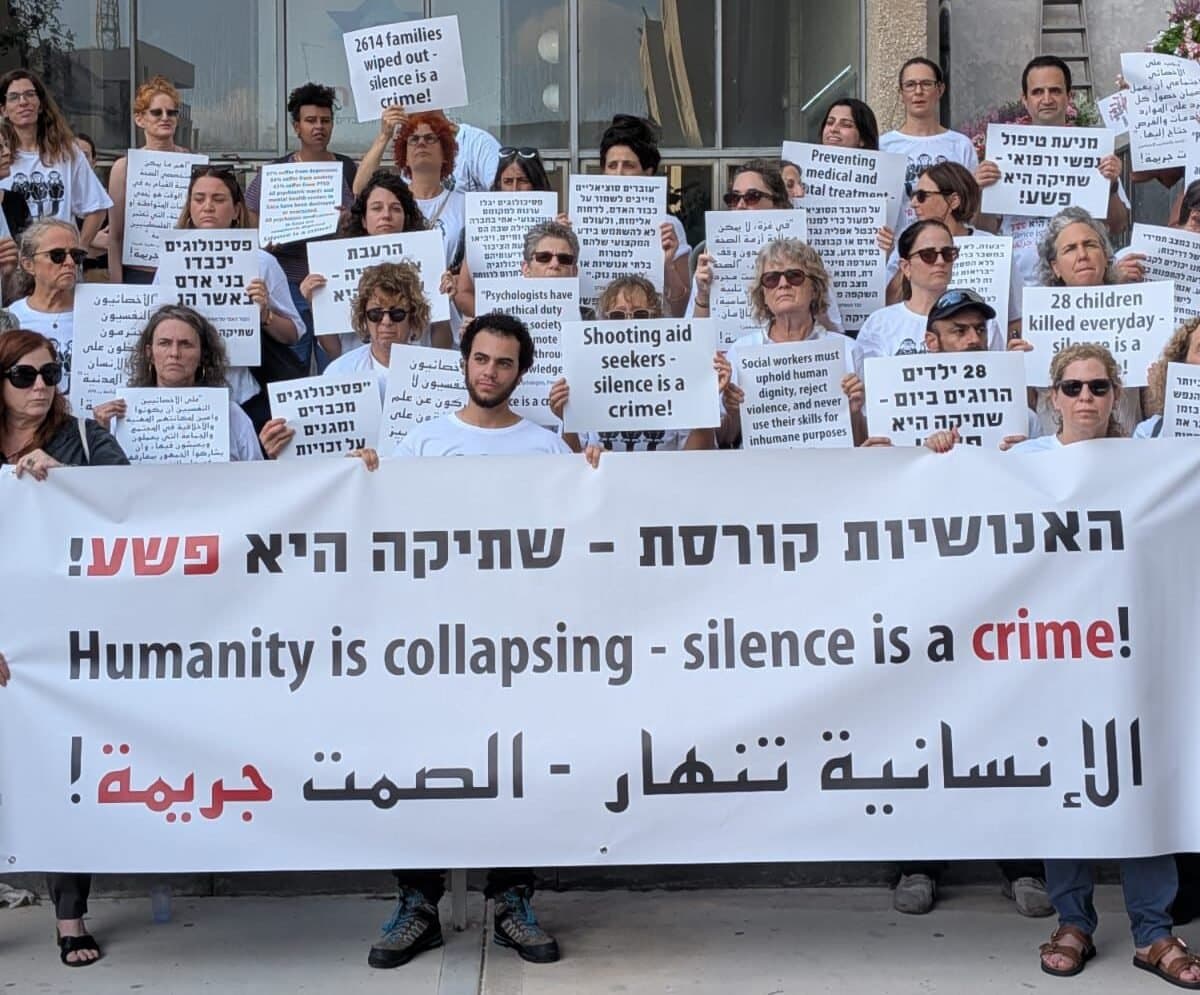
Over 75,000 dead in Gaza – among them tens of thousands of children. More than 150,000 physically and mentally injured. Mass starvation leaving hundreds of thousands under the threat of extreme famine, and nearly 90% of the Strip’s infrastructure completely destroyed: hospitals, schools, and entire neighborhoods wiped out. Simultaneously, in the West Bank, we are witnessing an unprecedented escalation of unbridled settler terrorism under the auspices of the state and its institutions, violence, ethnic cleansing, and the killing of over a thousand Palestinians. The annihilation and destruction are carried out in our name, day after day, also in Iran and Lebanon. The lives of others across the border have become cheap in the name of our illusion of security. In the midst of this ongoing atrocity, the deafening silence of the professional unions in the fields of mental health and welfare is nothing short of a betrayal of the ethics we swore to uphold. We cannot speak of compassion, vulnerability, or healing inside the clinics, while outside them we are passive accomplices to moral blindness, the normalization of war crimes, and the absolute dehumanization of the Palestinian people. We, mental health and welfare professionals, have decided to speak out against the silencing. Distress is our compass, and we refuse to cooperate with “resilience” that means emotional detachment and callousness. Our professional, human, and moral duty is to look directly at the atrocities, raise a clear and uncompromising voice against the crimes against humanity committed in our name, and demand the end of the war. Because at this time, silence is not a neutral position – silence is a crime.

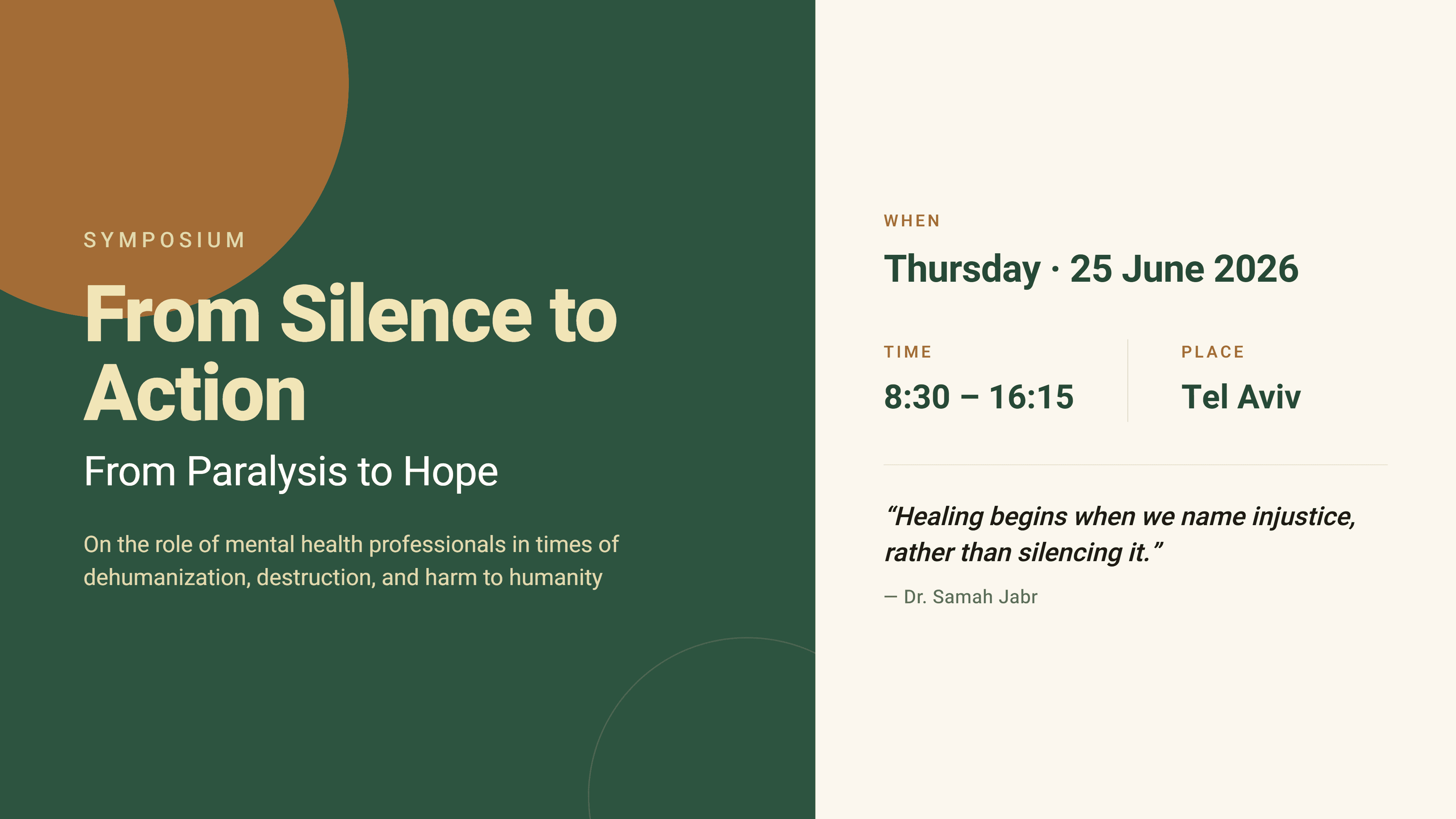
Symposium poster: dark green and cream layout, title "From Silence to Action", date Thursday 25 June 2026, 8:30–16:15, Tel Aviv.

Teaser for Our Study Day

"Silence is a Crime" calls on the mental-health professions to stop silencing themselves in times of violence and destruction. A study day on 25 June 2026 will examine the mechanisms that silence us, the ethics of care in times of crisis, and will present examples of practitioners in the field who are turning silence into action. Join us to re-examine our role and find a path from paralysis to hope.

ליאור בירן

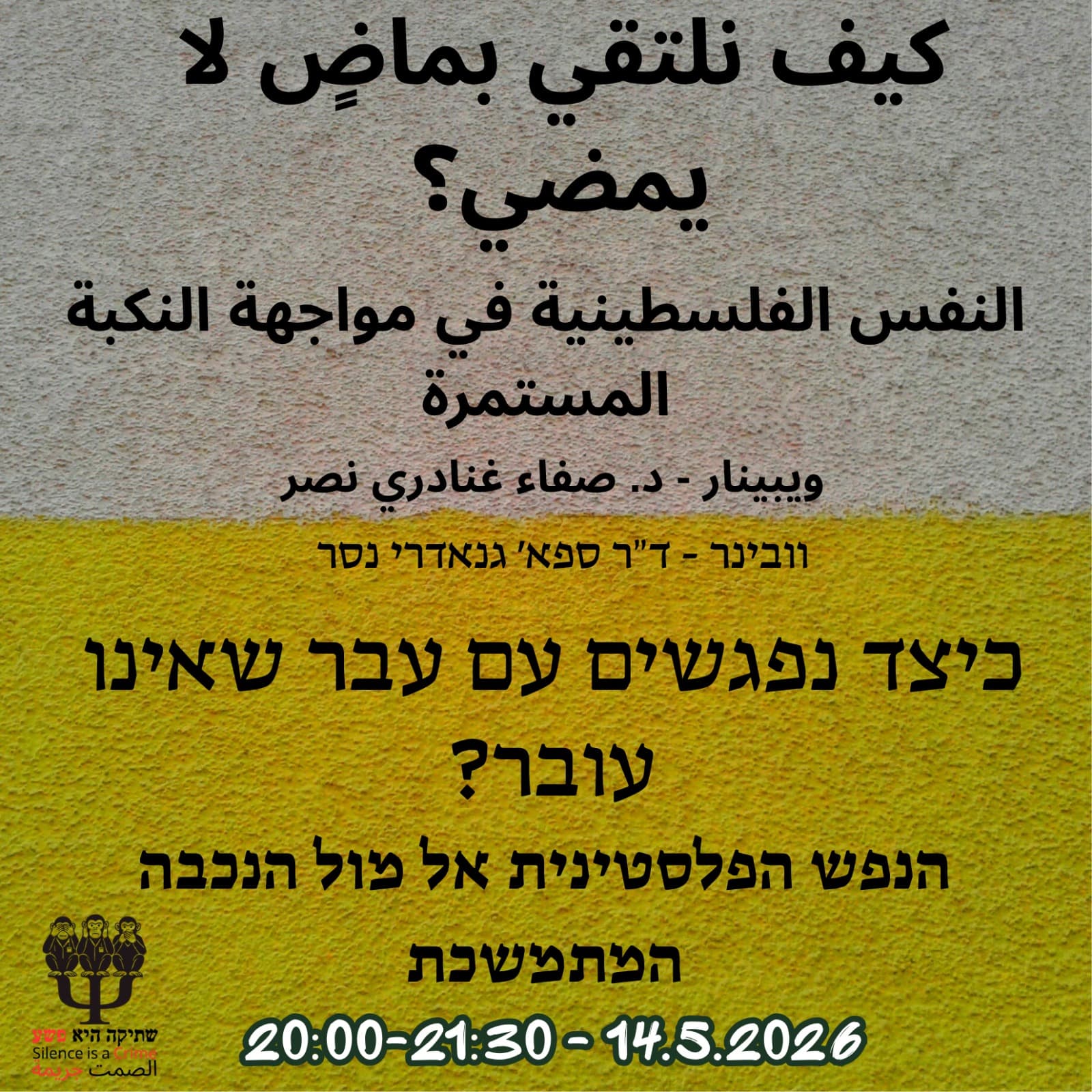
Webinar- How do we confront a past that does not pass? The Palestinian psyche facing the continuous Nakba

This webinar examines the psychological toll of the Nakba as an ongoing trauma rather than a historical event, exploring how collective Palestinian suffering persists when the past cannot be processed into memory but remains a continuous present of displacement and dispossession. Through liberation-oriented psychological analysis, the forum addresses the distinct mental health challenges faced by Palestinians living under conditions of perpetual threat to their existence and rights. The recording is available for those unable to attend, and the forum invites continued participation in its critical work of breaking silence around these structural violences.

ליאור בירן

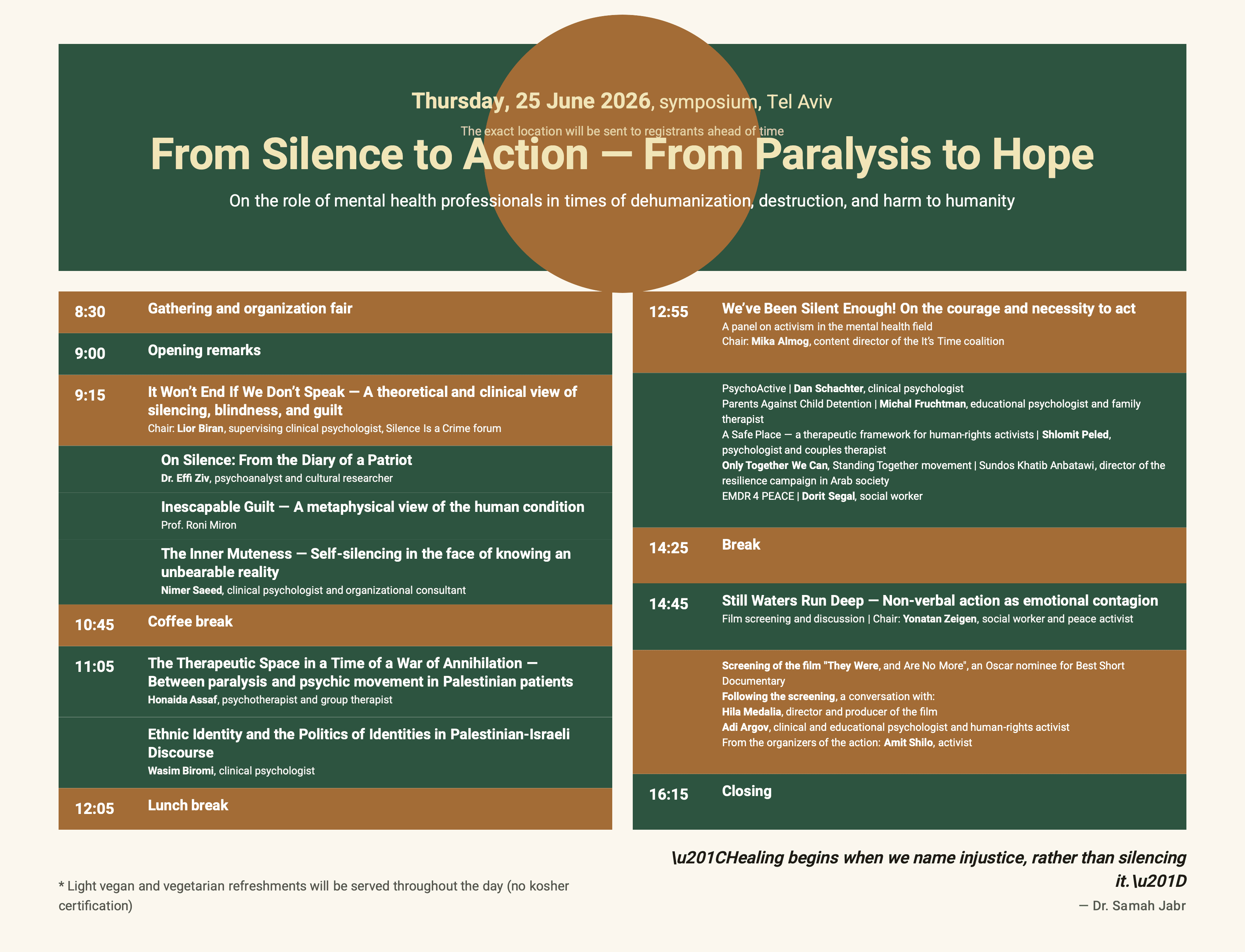
From Silencing to Action — From Paralysis to Hope

Israeli mental health professionals are convening for a critical study day to confront their professional responsibility during times of dehumanization and violence, moving beyond the paralyzing silence that has compromised clinical discourse. The event will examine the non-neutrality of silence, explore psychoanalytic and ethical dimensions of complicity, and equip professionals with practical tools for activism and testimony. Mental health workers are called to end their silence and act as agents of accountability both within and beyond the consulting room.

ליאור בירן

Eternal darkness

In just 10 minutes."Eternal darkness".357 killed.1,150 wounded.This is not what safety looks like.Condemn the massacre in Lebanon!Object to the bombing and killing!Humans are humans!Silence is a crime

City of Slaughter

[Bialik, Hayim Nahman. On the Slaughter (p. 30). (Function). Kindle Edition. ]Get up and go to the city of slaughter and come to the yardsand see with your own eyes and run your hands along the fencesand trees and stones, and across the walls’ plaster,and touch the dried blood and stiJened tissue spilled from skulls … להמשך קריאה

Yossi Triest

Regarding the Pain of Others and Our Own Actions

It is difficult to say “good evening” now. Even our beautiful word of greeting—shalom—catches in the throat.So I will begin with thanks. Thanks to the participants, to everyone who opened Zoom this evening with a willingness to open their eyes, and to open their hearts and minds to what is unbearable. Today’s conversation is also … להמשך קריאה

Hagit Aharoni